
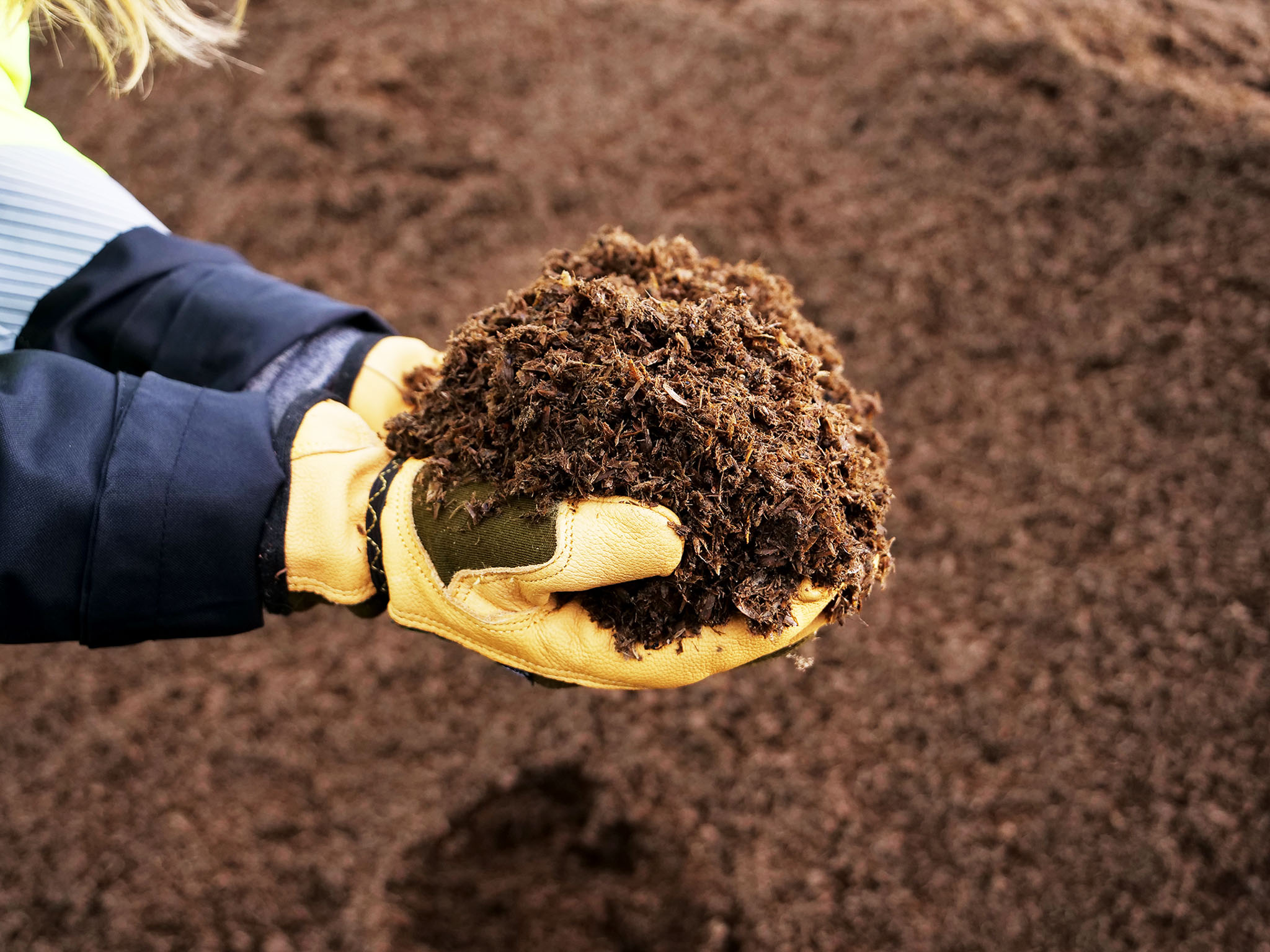
In recent years, peat has become an increasingly common component of potting soil thanks to its moisture-retention properties, fine texture, and low bulk density. Since the use of peat contributes to high carbon dioxide emissions, it must be replaced with more environmentally friendly alternatives. Because biofertilizer has properties similar to those of peat, it is an ideal alternative.
Peat is currently an important ingredient in many potting mixes, but its extraction has negative consequences for both wetlands and the climate. Biofertilizer has proven to be a sustainable and effective alternative, as both Econova and Hasselfors Garden have spent a year mixing potting soil with our dewatered biofertilizer instead of peat. Biofertilizer possesses the key properties that have made peat so popular in gardening: it contains just the right amount of nutrients, has a good structure, helps retain moisture in the soil, and contributes to a loose soil that is easy for plants to grow in.
The Future of Biofertilizer as a Peat Substitute
Since biofertilizer has proven to be a suitable substitute for peat, the future looks bright. Today, various bans on peat have been introduced in several European countries, and many of the countries that have not yet taken action are exploring alternatives. In Sweden, there is not yet a ban on peat, but public opinion is shifting in that direction.
Both customers and retailers are now demanding peat-free potting soil; the only problem is that it takes time to break old habits and think in new ways. Let’s work together to change that!
Are you interested in using biofertilizer instead of peat? We warmly invite you to contact us.