
biosolids
Return nutrients to the soil with quality-assured Biosolids
Biosolids important nutrients such as phosphorus and nitrogen, as well as organic matter. Through quality-assured handling and clear requirements, these nutrients are recovered and returned to the soil in a controlled manner.
Benefits
How Biosolids Contribute Biosolids Crop Production
By supplying plant nutrients and organic matter, sludge contributes to soil fertility and the long-term development of crops.
Supplies phosphorus and nitrogen
Provides important nutrients needed for crop development and growth.
Provides organic material
Add organic matter to improve the soil's structure, water-holding capacity, and biological activity.
Quality-assured and verified
Handled in accordance with clear requirements regarding content, traceability, and safe use in cultivation.
Part of a circular system
Returns nutrients to the crop and reduces the need for new resources.
Safe Biosolids Your Farm
Please contact us for information on availability, volume, and delivery.
Quality
How Quality Is Ensured in Biosolids
In order for Biosolids be used in agriculture, clear requirements must be met regarding their composition, handling, and monitoring. This process covers the entire chain, from origin to application.
Checks and Follow-up
Quality is ensured through continuous analysis of the content, which includes testing for metals and visible contaminants. This provides a clear picture of the material’s properties and how it can be used in cultivation.
Upstream Work and Revaq
An important part of quality assurance is upstream work, which actively reduces the inflow of undesirable substances into wastewater treatment plants. Certification systems such as Revaq set clear requirements for control, monitoring, and transparency throughout the entire chain.
FAQ
Frequently Asked Questions About Biosolids
Here we have compiled answers to some frequently asked questions about the use of
Biosolids, quality assurance, and the return of nutrients to the soil.
Revaq-certified Biosolids stricter requirements for traceability, composition, and quality assurance. The certification also includes requirements for sanitization and testing for Salmonella prior to application.
Wastewater treatment plants that are Revaq-certified work continuously to monitor and improve the quality of the incoming wastewater and, consequently, the sewage sludge. A large portion of the Biosolids Biototal supplies is Revaq-certified.
The application of sludge on farmland is regulated, among other things, by the Swedish Environmental Protection Agency’s regulations (SNFS 1994:2). The Swedish Board of Agriculture also has rules and guidelines regarding fertilization and the application of organic fertilizers.
In addition to national regulations, municipalities may have local environmental and health regulations that require notification or a permit for the application of the product.
The amount of sludge that may be spread must be adjusted according to the soil’s phosphorus status, heavy metal content, and the sludge’s content of, among other things, phosphorus, ammonium nitrogen, and metals, in accordance with the Swedish Environmental Protection Agency’s regulations (SNFS 1994:2).
Since sludge is classified as an organic fertilizer, the Swedish Board of Agriculture’s regulations stipulate that the application rate may not exceed 22 kg of total phosphorus per hectare per year, calculated as an average over a five-year period.
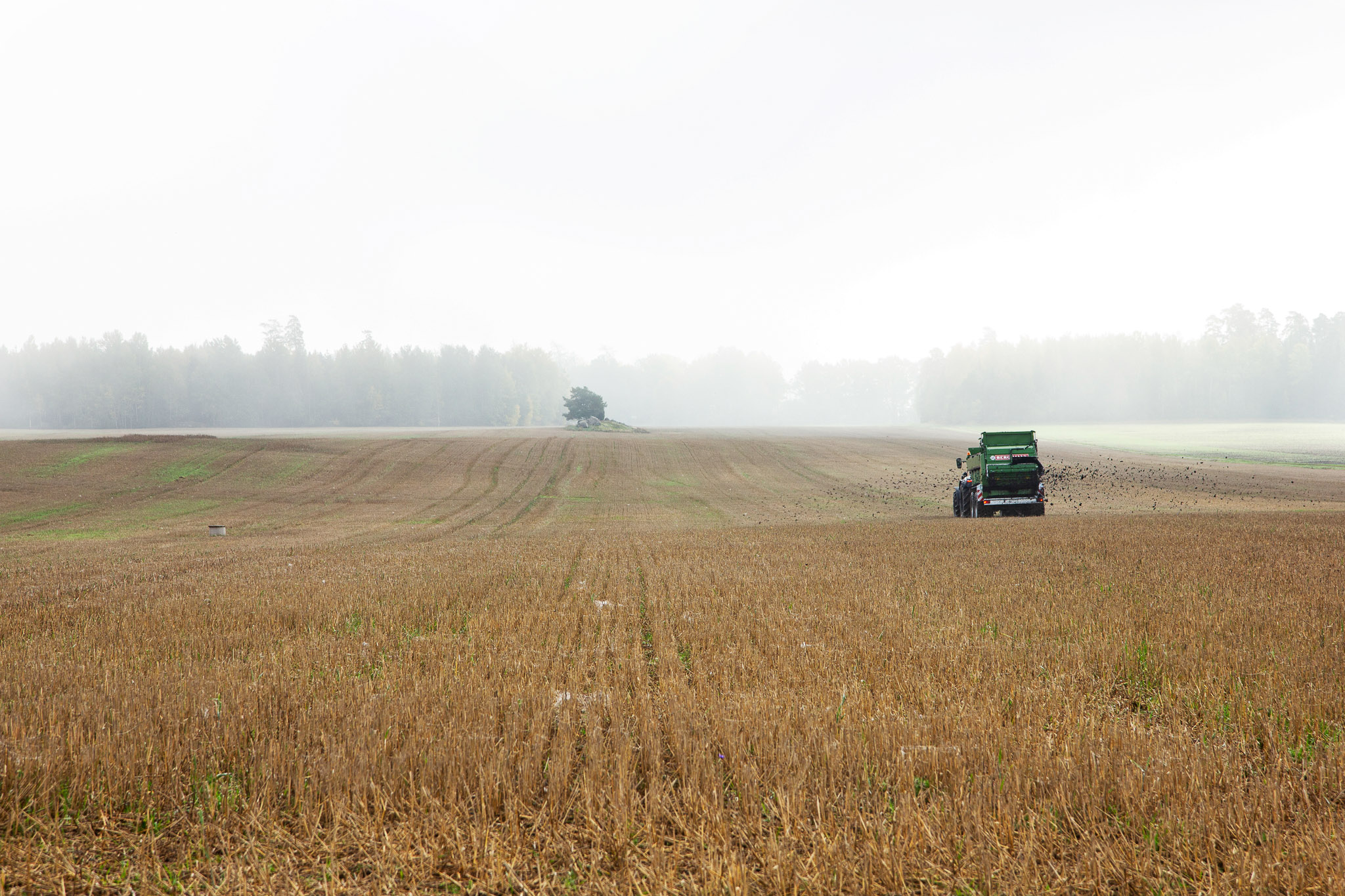
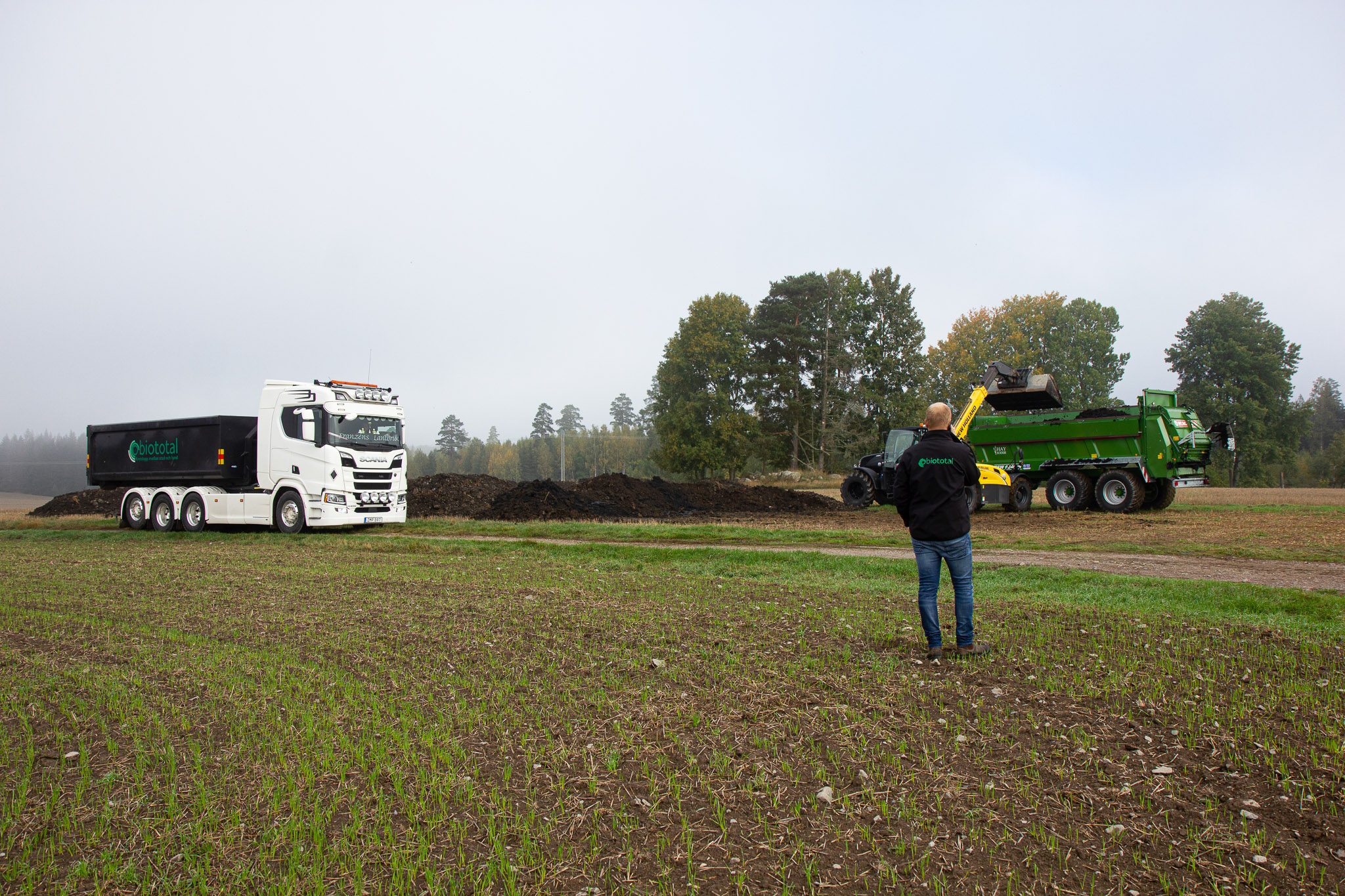
Sludge can be spread in both the spring and fall using a solid manure spreader, preferably a three-stage spreader for a more even distribution. After spreading, the sludge should be worked into the soil in accordance with applicable regulations and recommendations.
Krav kring nedmyllning finns bland annat i Naturvårdsverkets och Jordbruksverkets föreskrifter samt inom Revaq och lokala kommunala regler. På obevuxen mark ska slam normalt brukas ner inom fyra timmar för att minska kväveförluster, eller inom tolv timmar under vinterförhållanden.
No. There are areas and circumstances where the application of sludge is not permitted. For example, sludge may not be applied on:
- mark inom primära vattenskyddsområden
- mark som sluttar mer än 10 procent mot vattendrag
- snötäckt, frusen eller översvämmad mark
- mark nära vattentäkter eller vattendrag
The rules are in place to reduce the risk of leaks and protect aquatic environments.
Contact
Would you like to learn more about Biosolids agriculture?
Please contact us for information about content, requirements, and usage.