
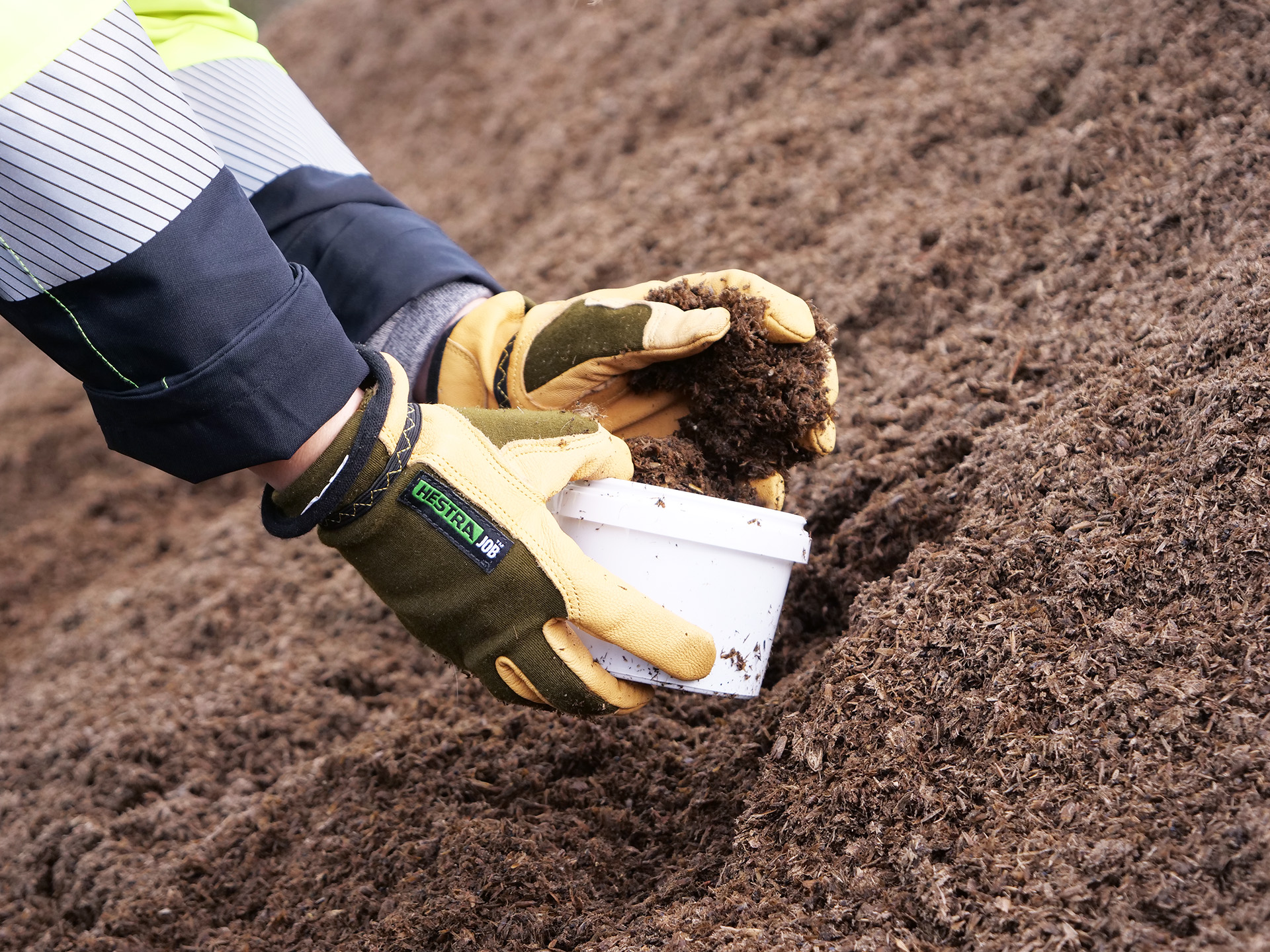
At the end of the month, our new composting drum will be delivered to Sofiedal. Thanks to this, we will be able to speed up the process of converting and processing organic material into biohumus. This also means that we will reduce our greenhouse gas emissions. We will be able to sanitize and compost 10,000 metric tons of material in the drum each year.
At our Sofiedal composting facility, we receive between 55,000 and 60,000 metric tons of organic material annually, which we compost and process. We are now investing seven million kronor in a composting drum. This means we will increase the turnover rate for the material from six to two months for the 10,000 metric tons we can process in the drum.
This is part of our KKP (Climate-Smart Recycling Products) project, which received Klimatklivet funding approval in December 2020. Instead of composting the material traditionally in windrows that are turned regularly, the process takes place in a closed system, which means we reduce our greenhouse gas emissions.
Several initiatives to reduce the environmental impact
Alongside the investment in the composting drum, the project is also pursuing a biochar initiative. The idea is that, through pyrolysis, we will convert 25,000–30,000 metric tons of organic material into biochar annually, thereby enabling us to replace peat with biochar in our own and others’ production of, for example, soil.
These are two different technologies through which we process the material and reduce our greenhouse gas emissions. In addition, we have invested in a new scale to better monitor volumes and ensure traceability of materials entering and leaving the facility. Previously, we weighed the material off-site.
We have also expanded the facility’s production area by paving the grounds and invested in an efficient water treatment plant. The facility is being modernized, and production is shifting toward being more demand- and order-driven. We are also preparing to meet the strict requirements set by the permitting authority; since we are classified as an IED facility (Industrial Production), we are also subject to the EU BAT Directive. We submitted an application for a new environmental permit in June 2023, and the process is still ongoing; our hope is to have our new environmental permit in place by June 2024 at the latest.
The First Compost Bin in Värmland
At the end of the month, the composting drum from Biocompost will be delivered. It is 18 meters long, 3 meters in diameter, and can process 10,000 metric tons of material per year. The plan is for it to be up and running by mid-March, once installation is complete and the feed and discharge equipment is in place.
The result will be higher-quality compost tailored to customer needs, produced in a controlled environment with a high and consistent standard throughout the processing.
There are compost drums in Sweden, but this is the first one in Värmland. If everything works as it should, a second drum will likely be installed shortly. This is a major development for us and our customers. We’ve been operating here at Sofiedal since 2001, and now we’re taking a major technological leap forward!